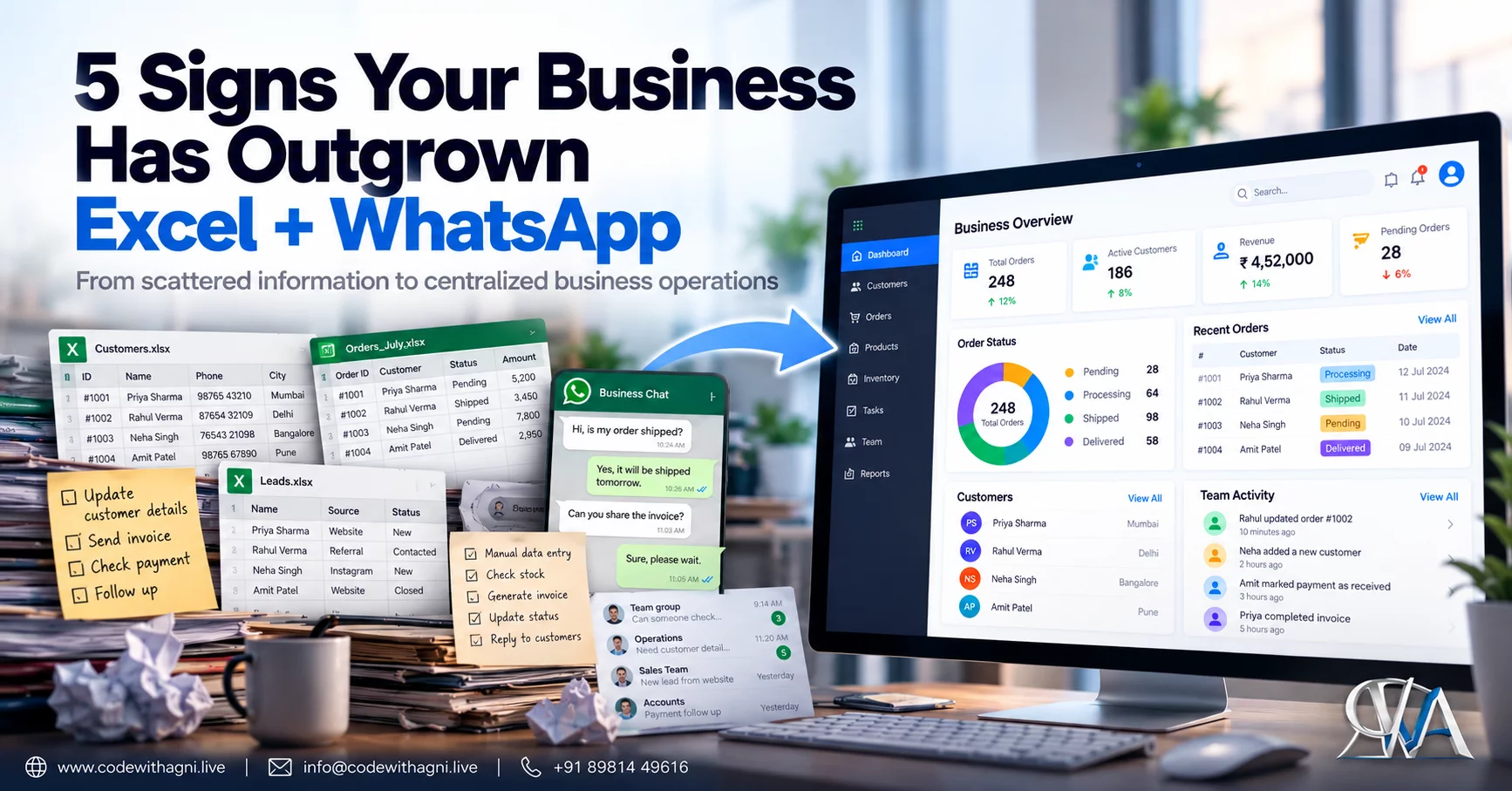
5 Signs Your Business Has Outgrown Excel and WhatsApp
Excel and WhatsApp can be excellent tools for running a small business.
They are familiar, accessible and relatively easy to start with. A spreadsheet can track customers, orders or payments, while WhatsApp makes communication quick.
But business operations change as a company grows.
More customers create more records. More employees create more coordination requirements. More orders create more status changes. More processes create more opportunities for information to become duplicated or lost.
Eventually, a business may find itself spending too much time managing information instead of managing the business.
Here are five practical signs that your business may have outgrown Excel and WhatsApp as its primary way of managing operations.
1. Your Data Is Duplicated or Inconsistent
If the same customer or order appears in multiple Excel files, WhatsApp conversations and documents, it becomes difficult to know which information is current.
One employee may have updated a spreadsheet while another is working from an older copy.
This can create unnecessary reconciliation work and make routine decisions more difficult.
A centralized business system can provide a shared source for important records, with appropriate access controls for different employees.
2. Tracking Customers and Orders Is Becoming Difficult
When customer and order information is spread across spreadsheets and conversations, simple questions can require considerable searching.
Your team may need to find:
- customer history,
- current order status,
- payment information,
- previous communication,
- pending tasks,
- responsible employees.
If finding this information requires checking several places, it may be time to consider a more structured system.
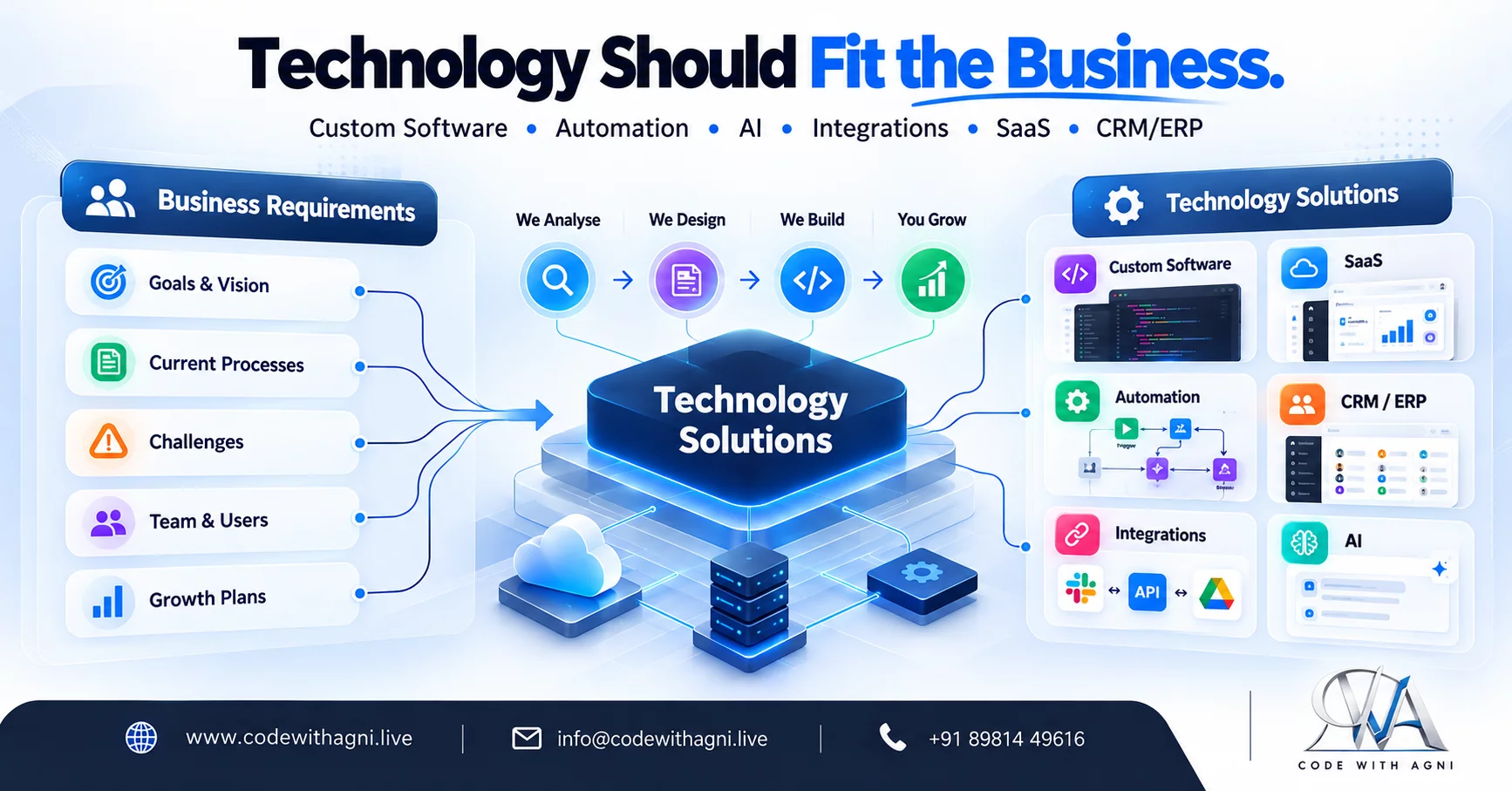
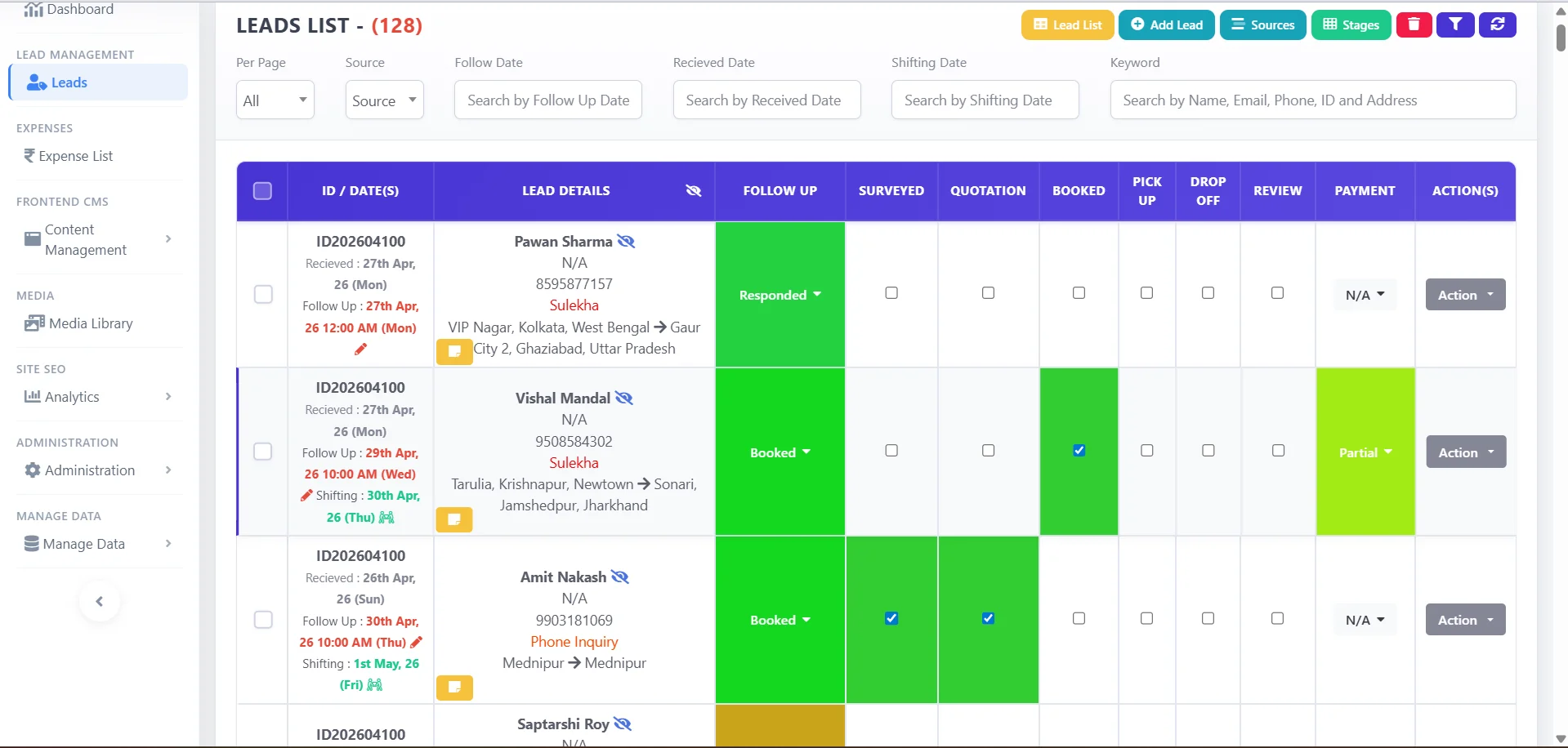
A CRM, ERP or custom business application can organize these records around the workflows your team actually follows.
3. Manual Work Is Increasing
Copying information from one spreadsheet to another may seem harmless when there are only a few transactions.
As volume increases, however, repeated manual tasks can become a significant operational burden.
Examples include:
- entering the same information multiple times,
- manually preparing recurring reports,
- copying order details between systems,
- sending repetitive status updates,
- maintaining separate lists for different departments.
Automation can reduce unnecessary repetition by allowing information captured during one step of a workflow to support subsequent steps.
4. Teams Don't Have Enough Visibility
A growing business often involves multiple teams.
Sales may manage customer conversations. Operations may manage fulfillment. Accounts may manage payments. Management may need an overview of everything.
If these teams work from separate spreadsheets and WhatsApp conversations, getting a complete picture can become difficult.
A centralized system can give each role access to the information relevant to its responsibilities while keeping business data organized.
The objective isn't simply "put everything in one place."
It is to create a reliable flow of information between the people and processes that need it.
5. Too Much Knowledge Depends on Individual Employees
A business becomes vulnerable when important operational knowledge exists mainly in people's heads.
For example, one employee may know which spreadsheet is current, which WhatsApp group contains a particular customer discussion, which orders are pending and what needs to happen next.
The process works while that person is available.
But when they are absent, others may struggle to continue the work.
A structured business system can help turn individual knowledge into repeatable workflows, records and processes that the wider team can access.
So, Has Your Business Outgrown Excel and WhatsApp?
Not necessarily.
Excel and WhatsApp are still useful tools.
The real question is whether they are still sufficient for the complexity of your business operations.
If your team is experiencing:
- duplicate information,
- difficult customer or order tracking,
- increasing manual work,
- poor visibility between departments,
- or heavy dependence on specific employees,
it may be worth evaluating a centralized business management system.
Depending on your requirements, that could be a CRM, ERP, automation platform or custom web application.
The right solution should be based on your actual workflow—not simply on the idea that a business has reached a certain size.
Start With the Process, Not the Software
Before choosing a system, map one important business process from beginning to end.
For example:
Lead → Customer → Order → Payment → Fulfillment → Delivery → Follow-up
Then identify where information is entered, copied, updated, communicated and stored.
This often reveals the real problem more clearly than simply asking, "Which software should we buy?"
Once the process is understood, it becomes easier to determine whether an existing platform can solve the problem or whether a customized solution is justified.
Final Takeaway
The point isn't to eliminate Excel or WhatsApp.
The point is to recognize when scattered tools are creating more operational work than they save.
When business information becomes difficult to find, update, share and trust, a centralized system can provide a more structured foundation for growth.
If your team is spending too much time searching for information, updating multiple files and asking who knows the latest status, it may be time to rethink how your business systems are organized.