
Website Performance Optimization
Improve website speed, Core Web Vitals, Lighthouse performance, technical SEO, and overall user experience with advanced optimization techniques.
Unit Specialized in
Website Performance Optimization Services
A slow website directly impacts user experience, search engine rankings, lead generation, and conversion rates. Modern users expect websites to load quickly across all devices, especially on mobile networks. Even a delay of a few seconds can increase bounce rates and reduce customer trust.
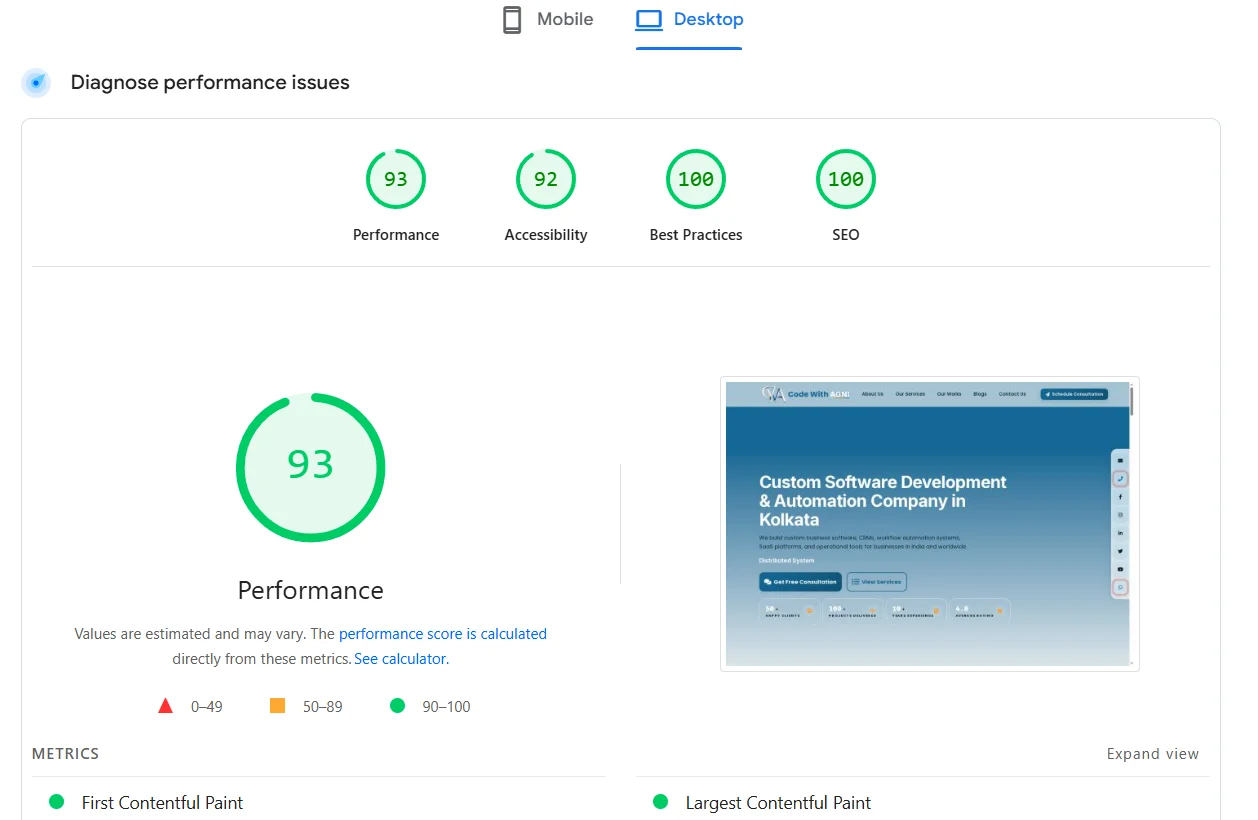
Our Website Performance Optimization service focuses on improving Core Web Vitals, technical SEO signals, page loading speed, rendering performance, and overall website responsiveness. We optimize websites using practical engineering techniques rather than relying on superficial score manipulation.
We analyze frontend assets, JavaScript execution, CSS rendering, server response times, image delivery, caching strategies, third-party scripts, and hosting infrastructure to identify bottlenecks that slow down your website.
The optimization process is tailored for business websites, SaaS platforms, CRMs, e-commerce systems, and custom applications that require both performance and stability.
What We Optimize
- Google Core Web Vitals
- Largest Contentful Paint (LCP)
- Cumulative Layout Shift (CLS)
- Interaction to Next Paint (INP)
- Render-blocking resources
- JavaScript and CSS delivery
- Image compression and lazy loading
- Server response and caching
- Technical SEO performance factors
- Mobile loading experience
Our goal is not only to improve Lighthouse scores, but to create websites that load faster, rank better, and deliver a smoother user experience for real visitors.
Sonar Scanner
The Engineering Lifecycle
A comprehensive, 5-stage blueprint designed to transform high-level requirements into resilient, production-ready technology assets.
Discovery & Strategy
We deep-dive into your business objectives, perform technical feasibility audits, and define the architectural North Star.
Architectural Blueprinting
Creating robust system designs, choosing the optimal tech stack, and defining scalable microservices and database schemas.
Agile Engineering
Iterative development with clean code practices, CI/CD automation, and constant alignment with the architectural vision.
Validation & Excellence
Automated unit testing, security penetration audits, and load testing to ensure your software is battle-hardened.
Deployment & Scaling
Zero-downtime deployments, cloud infrastructure scaling, and long-term maintenance for sustained technical success.
Technical Specifications
A granular breakdown of the capabilities, protocols, and architectural patterns baked into this unit.
-
Largest Contentful Paint (LCP) improvements
-
Cumulative Layout Shift (CLS) optimization
-
Interaction responsiveness improvements
-
Mobile performance tuning
-
Real user experience optimization
-
JavaScript optimization and cleanup
-
CSS optimization and minification
-
Render-blocking resource reduction
-
Deferred and async script loading
-
Font and animation optimization
-
Image compression and resizing
-
WebP and next-gen image support
-
Lazy loading implementation
-
Responsive image delivery
-
Asset delivery optimization
-
Caching and compression configuration
-
Hosting and server bottleneck analysis
-
Technical SEO performance improvements
-
Core infrastructure recommendations
-
Performance testing and validation
Architectural Excellence.
We adhere to a strict set of engineering standards that ensure every line of code we write is built for high-performance and future-proof scaling.
Security First
Scalable by Design
Additional Benefits
Additional Benefits
- Improved Google search visibility
- Better mobile usability
- Lower bounce rates
- Improved conversion potential
- Enhanced user experience
- Technical SEO improvements
- Reduced page load times
- Performance recommendations for future scalability
- Optimization guidance for long-term maintenance
We also provide recommendations for maintaining performance as your website grows, including hosting considerations, plugin management, media handling practices, and third-party integration control.
L3 Support
Documentation
How We Execute
Our Performance Optimization Process
Every website has different performance bottlenecks. Instead of applying generic fixes, we perform a structured analysis to identify the exact issues affecting loading speed, rendering, and user experience.
1. Performance Audit & Analysis
We begin by analyzing the website using Lighthouse, Core Web Vitals reports, network diagnostics, browser rendering analysis, and server response evaluation.
2. Frontend Optimization
- CSS and JavaScript optimization
- Render-blocking reduction
- Unused asset cleanup
- Deferred and async loading
- Font optimization
- Animation performance tuning
3. Media & Asset Optimization
- Image compression
- WebP conversion
- Responsive image delivery
- Lazy loading implementation
- CDN recommendations
4. Server & Infrastructure Improvements
- Caching configuration
- Compression setup
- Hosting bottleneck analysis
- Database and backend optimization
- Server response time reduction
5. Final Testing & Validation
After optimization, we perform testing across devices, browsers, and network conditions to ensure the website maintains performance, usability, and stability.
Commercial Execution Model
Flexible Pricing Based on Website Complexity
Website performance optimization pricing depends on the current condition of the website, technology stack, hosting infrastructure, third-party integrations, and overall project complexity.
Every website has different bottlenecks. Some require frontend optimization only, while others may need deeper infrastructure improvements, caching strategies, server tuning, or technical SEO corrections.
Factors That Influence Pricing
- Website size and page count
- Technology stack and framework complexity
- Current Lighthouse and Core Web Vitals status
- Third-party scripts and integrations
- Hosting environment limitations
- Frontend and backend optimization requirements
- E-commerce or dynamic application complexity
- Custom development requirements
Common Optimization Scenarios
- Business website speed optimization
- Core Web Vitals improvements
- Technical SEO performance fixes
- WordPress performance optimization
- Custom application optimization
- SaaS and CRM performance tuning
- Server and infrastructure optimization
After reviewing your website, we provide a clear optimization roadmap along with estimated timelines, technical recommendations, and project cost.
Contact us for a detailed performance audit and optimization consultation tailored to your website.
Frequently Asked Questions
Quick answers to common questions about our services and engineering process.
A faster website improves usability, engagement, trust, and the overall browsing experience for visitors.
LCP (Largest Contentful Paint) measures loading speed.
CLS (Cumulative Layout Shift) measures visual stability.
INP (Interaction to Next Paint) measures responsiveness.
Improving these metrics helps create a smoother experience for users and can positively impact SEO performance.
The exact optimization approach depends on the hosting environment, plugin usage, page builders, and overall website structure.
Google evaluates many ranking signals including content quality, backlinks, technical SEO, mobile usability, and user experience. Website performance is one important part of the overall optimization strategy.
Basic optimization projects may take a few days, while larger websites, SaaS platforms, or complex applications may require deeper frontend, backend, and server-level optimization work.
The goal is to improve loading speed and user experience without negatively affecting the website's visual appearance or business functionality.
Ready to Architect Your Next Digital Sovereign?
Schedule a technical discovery call with our leads to discuss your high-performance software requirements and architectural needs.